
Whatever the present moment brings, accept it as if you had chosen it yourself.
/Eckhart Tolle/
Whatever the present moment brings, accept it as if you had chosen it yourself.
/Eckhart Tolle/
What is connected breathing?
A Brief History
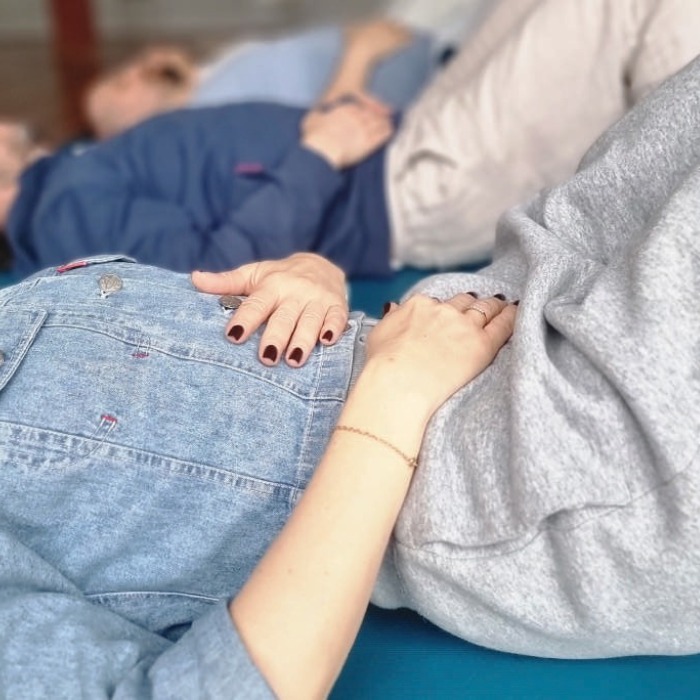
Breath is our first teacher – quiet, natural, and ever-present. It holds the power to calm, release, and bring about profound transformation. During the course, we work with our breath in a conscious and mindful way, drawing on the method of connected breathing – a practice that opens the door to a deeper connection with ourselves, our bodies, our emotions, and our intuition.
Connected Breathing is a method of working with the breath based on conscious, connected breathing – a natural rhythm in which inhalation and exhalation flow seamlessly. This simple yet profoundly deep practice supports the release of tension, the dissolution of emotional blocks, and the expansion of awareness.
This method was developed by Leonard Orr in the 1970s, who observed that breathing can support us in integrating past experiences, beliefs, and emotions that influence our daily lives. Working with connected breathing is not a therapy, but a process that allows for gentle contact with what demands attention – through the body, breath, and presence.
What is a breathing session?
During the breathing session, we take deep, energetic breaths – starting from the abdomen and gradually expanding the chest upward. Each energetic inhalation is followed by a free, relaxing exhalation – the chest falls naturally, without effort. And then comes another inhalation… and exhalation…
Breathing remains continuous – there are no pauses between inhalation and exhalation, nor between exhalation and the next inhalation, not even the briefest moment of pause.
At first, the breathing process is consciously guided, but over time, the body finds its own rhythm and follows it naturally.
The session has its own distinct dynamics: energy gradually builds, reaches a peak, and then subsides, leading to a return to calm, natural breathing. The course of this wave is unique to each person, though it typically lasts about an hour. It is worth noting that the subjective perception of time may change – or even disappear entirely – because during a deep session, we stop focusing on its passage.
What happens during the session?
During the session, the body is intensely oxygenated. The energy of the breath, reaching the cells like a cleansing wave, helps dissolve tension and internal blockages. A variety of sensations may arise in the body – such as tingling, cramps, pain, a feeling of cold or heat, heaviness, or lightness.
All these experiences are natural and fleeting – they leave no negative effects on the body. During the session, you may also feel a sense of intensity or momentary anxiety. That is why it is so important to know what to expect – and to be aware that whatever arises is safe and will subside once the process is complete.
At the same time, you remain in a safe space at all times, under the care of an experienced teacher and assistants. Their presence and attentiveness provide real support – especially during moments that may be more challenging. You are not alone in this process – you have people by your side who are watching over its progress and are ready to support you at every stage.
What you may experience:
 in the body: warmth, tingling, a sensation of energy flowing, relaxationin the emotions: the release of tension, emerging feelings, and deep emotional arousalmentally: clarity, insight, peace of mind, and a sense of spacespiritually: deeper awareness, connection with oneself and one’s unconditional nature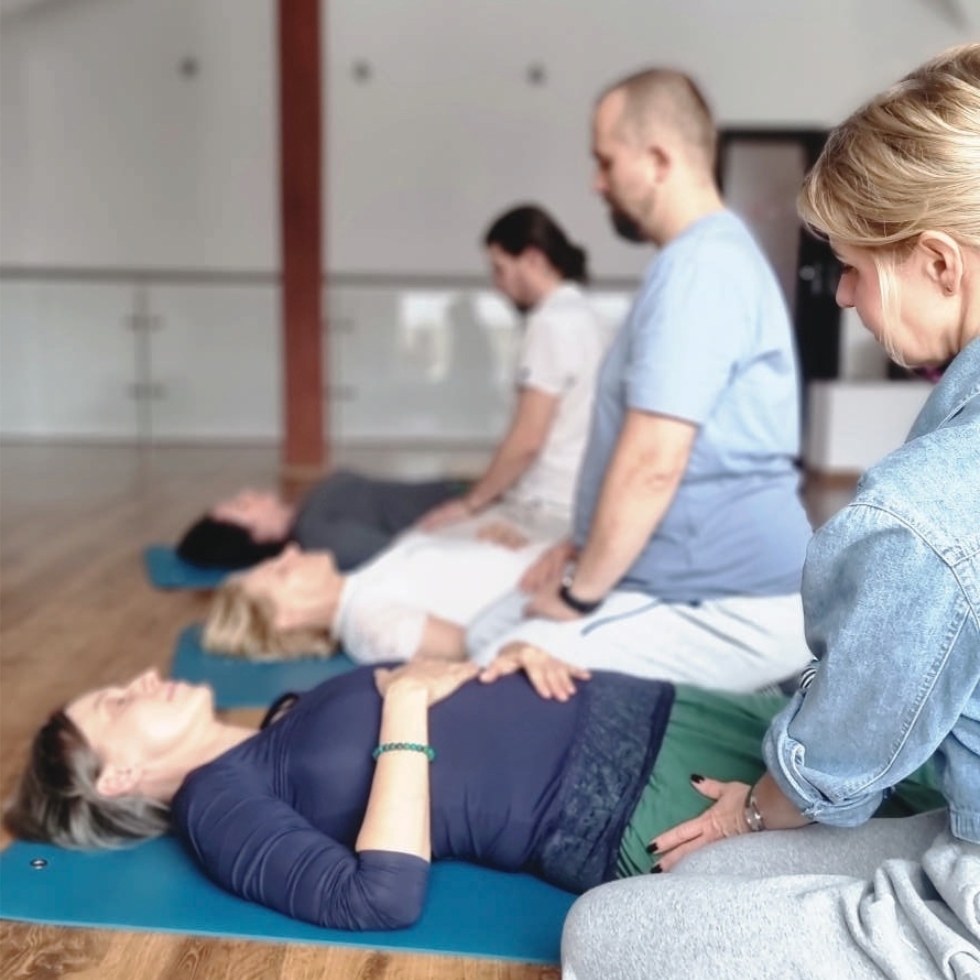
Why is it beneficial and what are the results of the session?
After the session:
How can you try this method for yourself?
F.A.Q.
Is connected breathing safe?
Connected breathing is a safe method when practiced under appropriate conditions and under the guidance of an experienced facilitator.
During a session, the body enters an intensive process – the rhythm of breathing changes, the body begins to respond, and attention turns inward. Various sensations may arise: tingling, a sense of energy moving through the body, as well as emotions that were previously held in the body.
This is a natural part of the process. The body releases tension and restores balance.
This is precisely why the presence of a facilitator is so important – someone who watches over the process, supports you, and helps you move through it in a safe and conscious way. This allows you to fully trust whatever arises.
How long does a breathing session last?
A breathing session has its own rhythm and dynamics.
Typically, the breathing part lasts from about one hour to one and a half hours, while the entire meeting – including preparation and integration – takes around two hours.
This is not just time measured by a clock. During the session, your perception changes – you may feel that time flows differently, slows down, or even ceases to matter.
Each session is different. Each has its own wave – a build-up, a peak, and a return to calm.
Can this type of breathing be practiced alone, without a facilitator?
At the beginning of this journey, it is very important not to be alone.
Although breathing is natural, this way of working with the breath can activate deep processes – both in the body and in the emotions. That is why the presence of a facilitator provides a sense of safety and real support.
Only with time, experience, and a deeper understanding of your body’s responses does independent practice become possible. Even then, it is usually gentler in nature and requires greater awareness and sensitivity.
It is a bit like learning to swim – at first, you need someone by your side, and only later can you enter the water freely on your own.
Do you need prior experience?
No prior knowledge or experience is required.
You enter this process exactly as you are – with your breath, your body, and your story.
At first, the breath is guided consciously, step by step. Over time, the body begins to recognize it and follow it naturally.
This is not something you “learn” in your mind – it comes through direct experience and practice.
Can everyone practice?
Most people can benefit from this method, but not in every situation and not always in the same way.
Every body is different. Every moment in life is different.
That is why, before beginning, it is important to pause – to have a conversation and to check whether this is the right moment and whether this method is appropriate for you right now.
This is not a practice “for everyone, always” – it is a practice for those who are ready for it.
What are the health contraindications?
There are situations where special caution is needed or participation should be avoided.
These include, among others, serious heart conditions, uncontrolled high blood pressure, epilepsy, recent surgeries or injuries, as well as certain mental health conditions.
The body works intensively during a session – which is why it is important that it is ready for it.
If there are any doubts, it is advisable to consult a doctor and inform the facilitator. Awareness and responsibility are an integral part of the practice.
How does connected breathing differ from other breathing methods?
Connected breathing is distinguished by its continuity.
The inhale flows smoothly into the exhale, and the exhale into the next inhale – without pauses, without holding. This creates an uninterrupted rhythm that gradually leads deeper – into the body, into emotions, and into inner experience.
Unlike many breathing techniques that primarily aim to calm and relax, this method can be intense. It can move, open, and transform.
This is not just a breathing technique. It is a process.
A process in which the breath becomes a tool for connecting with yourself – on a level that we often do not reach in everyday life.